Here's where moose and deer find their food – SLU releases unique map
For the first time, there is now a map showing where the forage for deer and moose is located. The maps, produced by researchers at SLU, shows where key tree species for ungulates are found and how much is at grazing height.
Risks associated with autumn planting under high grazing pressure
Pine seedlings planted in autumn had poorer survival rates, slower growth and more damage compared to pine seedlings planted the following spring. Grazing damage during the first winter explains why the autumn-planted seedlings lag behind even five years after planting.
It is difficult, if not impossible, to achieve several of the targets set for moose management. This is according to a new report from the Swedish University of Agricultural Sciences (SLU). This is due to a combination of ambitious targets, climate change and hunters' unwillingness to further reduce the moose population.
Spruce’s genes determine the spread of the root rot
The spruce tree’s own genes determine how well it resists root rot – and the outcome of the battle against the fungus is decided already in the early stages of infection.
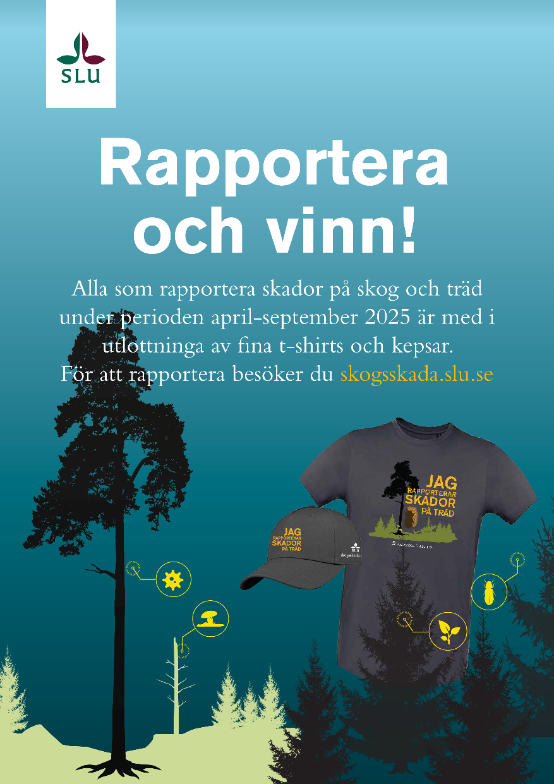
The competition where you could win a T-shirt or cap for your report in Skogsskada has now been finalised and the winners have been contacted. Congratulations to you all!
If you are the lucky winner, you will have received an email from adminskogsskada@slu.se with instructions on how to claim your prize.
We would also like to take this opportunity to thank everyone who contributed reports. Every observation submitted helps to increase knowledge about forest damage and provides valuable data for research and those working in the forestry industry.
The conference is primarily aimed at those working in the forestry sector, those who are professionally active in or researching forests, and forest owners.