Strong support for restoring ash, but several obstacles remain
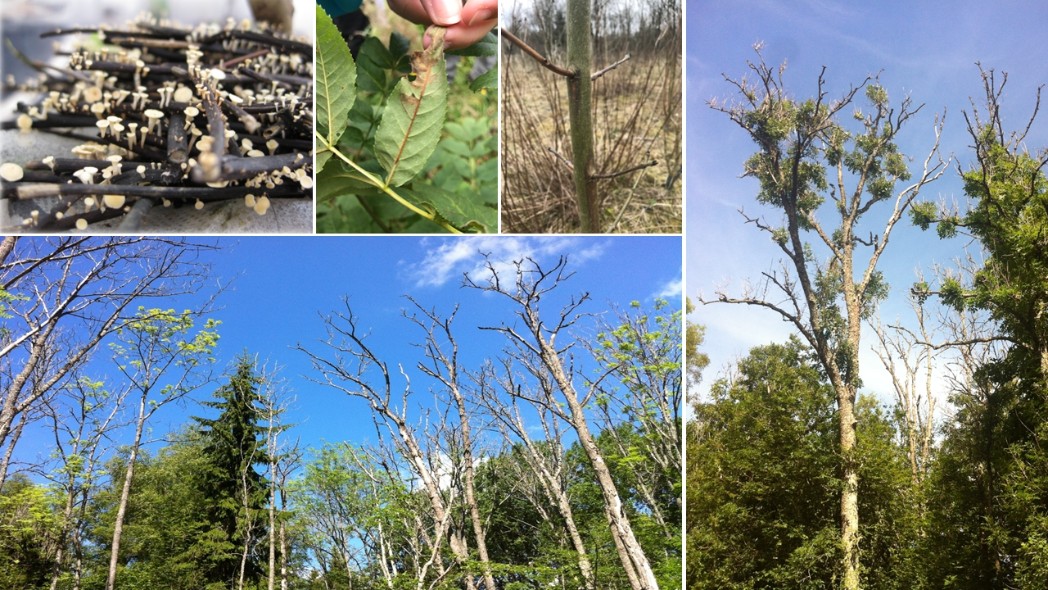
Ash have been severely affected by ash dieback and their numbers have declined sharply. A new study from SLU shows that there is strong support for saving the ash tree – but also that the willingness to take action is limited. There is also uncertainty regarding planting material, responsibility and financial risks.
Early detection of infestations – confirmed by tests across Europe
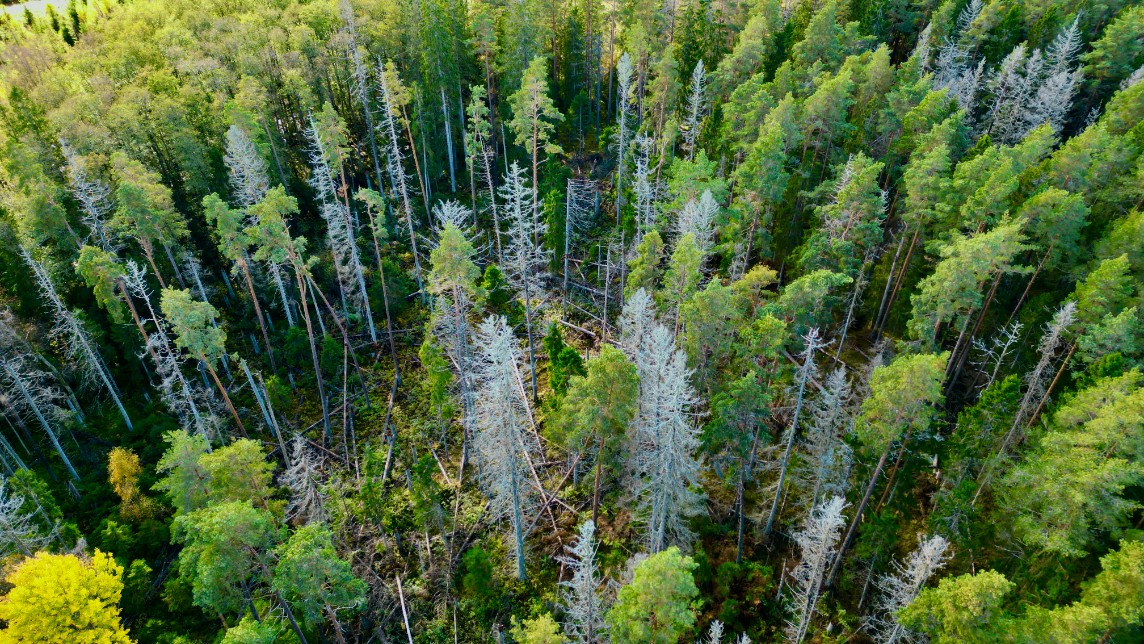
Previous research has shown that drones can detect spruce bark beetle infestations before the trees show visible symptoms. Now, an SLU-led study involving several European countries confirms that the method works in different types of forest and under various conditions. This is an important step towards practical application.
Risk of major problems with the spruce bark beetle in storm-damaged forests
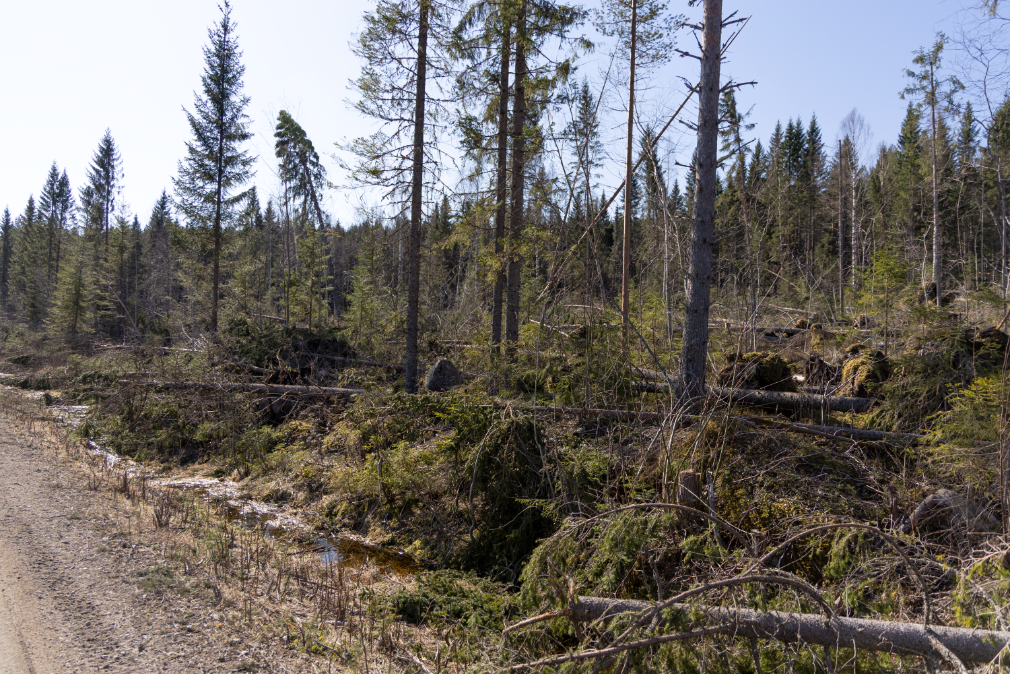
The spruce bark beetle is now emerging, and conditions may be particularly challenging in the areas affected by the storms Johannes and Dave. The SLU Forest Damage Centre is therefore encouraging forest owners to be extra aware of spruce trees that have been felled in the storms.
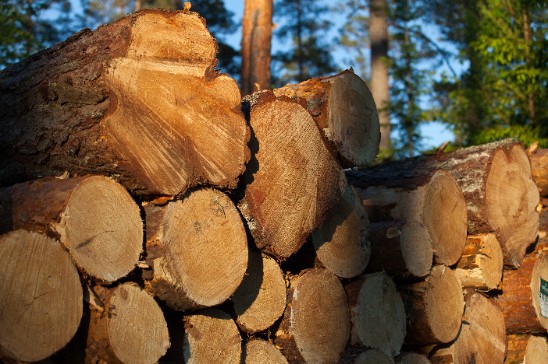
The standing volume of wood in living trees in Sweden continues to grow. This is a result from the annual official statistics, Forest Data 2026, from the SLU Swedish National Forest Inventory.
The trend of increased growth continues in this year's statistics. At the same time, the loss, i.e. trees that have been felled or died, is decreasing.
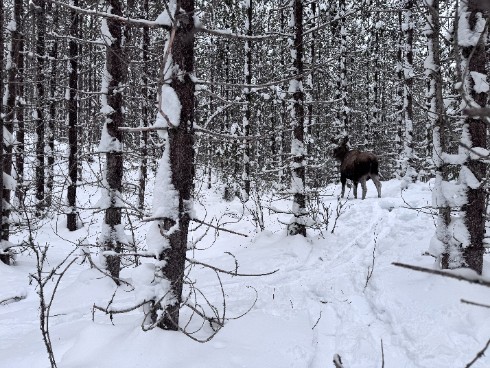
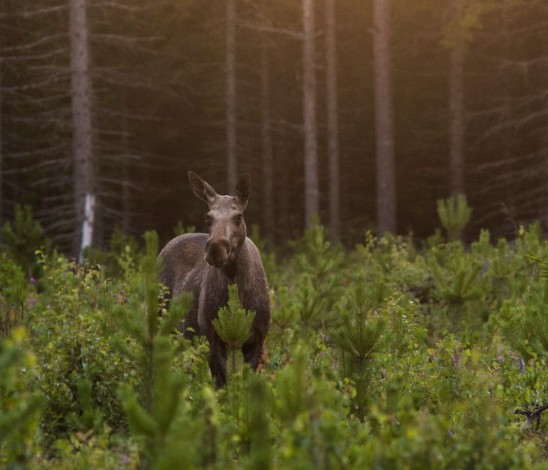
Junsele moose do not avoid forests with the non-native contorta pine
North American contorta pine or native Scots pine – it makes no difference to moose. At least not when it comes to the type of young forest moose choose to inhabit, according to a study conducted in Junsele by researchers at Swedish University of Agricultural Sciences.
– Our results show that moose use young forests dominated by contorta pine to the same extent as young forests with native Scots pine. We found no indication that they avoid areas with contorta pine. Instead, they selected this habitat year-round, says Wiebke Neumann, researcher at SLU.
Browsing moose and deer affect biodiversity – can increase species richness in forests
When ungulates browse, they create new habitats that allow more species of both beetles and vascular plants to thrive in forests. But in some cases, browsing can have the opposite effect on biodiversity. This is shown in a doctoral thesis at the Swedish University of Agricultural Sciences (SLU). Photo: Jesper Stenmark.
The SLU Forest Damage Centre announces a call with focus on monitoring of forest damage. The call is for short-term monitoring projects that focus on method development and will be carried out in 2027 or until early 2028.
3 November 2026 | Webinar on damage in nurseries and reforestation
Planning is underway, and we hope to be able to present research and PhD projects, as well as the challenges faced by nurseries and in reforestation with regard to damage and pests.
The conference is primarily aimed at those working in the forestry sector, professionals working in or conducting research on forestry, and forest owners. Save the date
26
May
26 May 2027 | Excursion - Save the date
We are planning an excursion to Tönnersjöheden. The programme and further details will be provided closer to the date.