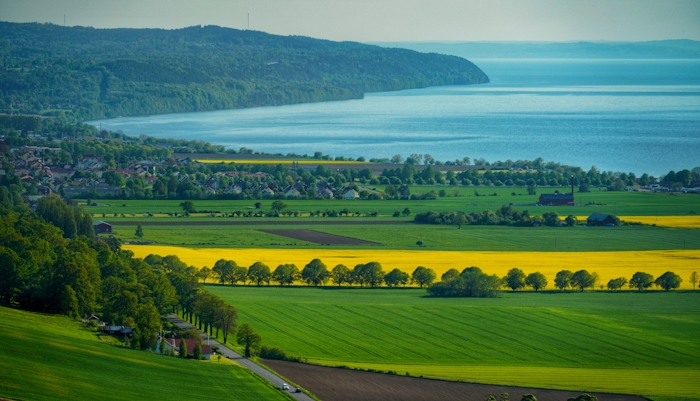
In this newsletter, you can read about the effects of flower-strips on pests and beneficial organisms
and the economics of chocolate - and many other news from SLU.
We would also like to highlight several recent PhD graduates from SLU who have worked on plant protection issues – you can find their theses further down.
And finally, a reminder ahead of your summer travels: please avoid bringing plants, seeds, plant material or other plant parts back from abroad, as they may carry pests that are not found in Sweden.
Katja Fedrowitz and Cajsa Lithell Coordinator and communicator
for the SLU Plant Protection Network
Traveling the world? Plant pests love to travel – and they move fast
This is part of the message behind #PlantHealth4Life, an EU campaign by the European Food Safety Authority (EFSA) that highlights the link between plant health and our daily lives.
We can all help to stop the spread of plant pests by making sure we don’t bring anything unwanted home in our luggage after traveling.
The structure of landscapes surrounding forests and grasslands influences the occurrence of pathogenic fungi in soils worldwide. A new study shows that landscape structure is a key factor in understanding soil biodiversity.
Swedish flower-strip initiative boosts pollinators - with variable effects in crops
Flowering field margins have become an increasingly common feature in the Swedish agricultural landscape. A new study from SLU shows that they work well to attract pollinators, but that their effects on pests and beneficial organisms in crops are more nuanced than previously thought.
Beyond clay content and fixed root-to-shoot ratios for organic carbon estimates in Swedish agricultural soils
Miyanda Chilipamushi is the author of a new doctoral thesis that evaluates sources of uncertainty in estimates of organic carbon storage in Swedish agricultural mineral soils. Her results open up for better decisions for soil management and climate mitigation in the future.
Half of the worlds cocoa stems from West Africa, making the cocoa bean the foundation for one of the most important agroforestry-based economies. What happens to everyone working with cocoa when a harvest is affected by drought?
Rare boreal deadwood fungi do not recover in clear-cut forests
Managed boreal forests support far less diverse fungal communities compared to successional forests sprung from forest fires. A new study from the Swedish University of Agricultural Sciences shows stark differences in the abundance of rare species between environments of different forest regimes.
She wants to find out how forest management affects nature’s own defences
Vilken påverkan har mänsklig aktivitet så som skogsskötsel på naturlig
kontroll av skadeinsekter? Det har Fredrika Wrethling, doktorand vid SLU
Skogsskadecentrums forskarskola tittat närmare på i första delen i sitt
projekt.