In this newsletter, you can read about the consequences of climate change and how we can adapt, sustainable solutions, and how the right choice of plants can benefit pollinators.
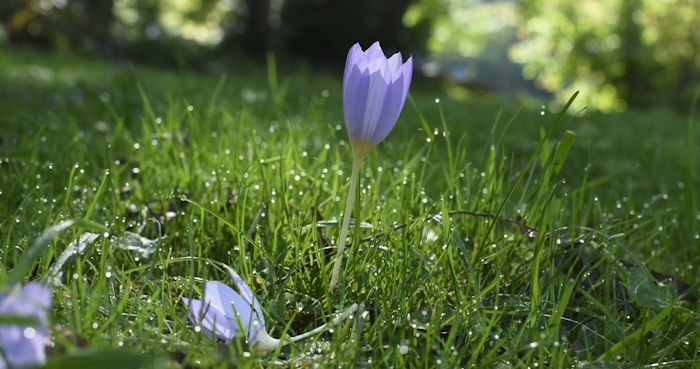
We wish all our readers joy when the spring flowers arrive!
Katja Fedrowitz and Cajsa Lithell Coordinator and communicator
for the SLU Plant Protection Network
The journal Le 1 Hebdo published a
special issue in October 2025. Produced in six languages — Croatian, English, French, German, Polish, and Romanian —, this issue embodies the spirit of AGROWISE, bridging science, policy, and practice.
Tracking climate shocks to build future resilience
What can past climate extremes teach us about resilience? Researchers at SLU’s Interdisciplinary Academy (IDA) are studying long-term data on climate, farming, soils, and society to uncover patterns that could help us adapt to future challenges.
The right flower can attract more beneficial organisms – above and below ground
Not all flowers deliver the same benefits. A new study from SLU shows that choosing the right plant species for flower strips can simultaneously support pollinators, natural enemies to pests, and soil life – while poor choices may have the opposite effect.
Pesticides significantly affect soil life and biodiversity
In a large European study, around 70 per cent of soils were contaminated with pesticides. This can be linked to changes in biodiversity, not least in terms of beneficial soil organisms that are important for nutrient cycling, carbon storage and thus also food production.
Spruce volume increases across Sweden – despite shrinking areas suited under future climate
Climate projections indicate that large parts of southern Sweden may become unsuitable for spruce by the end of this century. But the current management trends are moving in the opposite direction: spruce volume is increasing.
More variation in the field reduces nitrogen losses
How can agricultural nitrogen losses be reduced without compromising yields? New research from SLU shows that more varied crop rotations can lower emissions to the atmosphere while benefiting both the environment and farmers’ finances.
Smart farming scares pests
away – and lures them aside
Smallholder farmers in Africa
struggle with weeds, insect pests and low soil fertility. The push-pull system,
where crops are grown alongside other plants that scare away or attract pests,
is one way of dealing with these problems. The method works – but not
everywhere and not in the same way.
Scots pine blister rust is increasing in the north – here are the factors that associate with the risk
Scots pine blister rust is spreading in the pine forests of northern Sweden and Finland. Researchers now see a link between the disease and climate factors such as temperature, precipitation, soil moisture and fertility—and that the disease may increase further in a warmer climate.
He wants to lay the foundation for tomorrow's resistant spruce trees
How does spruce defend itself against pathogenic fungi? And can this information contribute to future breeding programmes? Isak Ingerholt, a doctoral student at SLU Forest Damage Centre's research school, aims to find answers to these questions.