Aktuellt om skogsskador och SLU Skogsskadecentrum | |
|
|
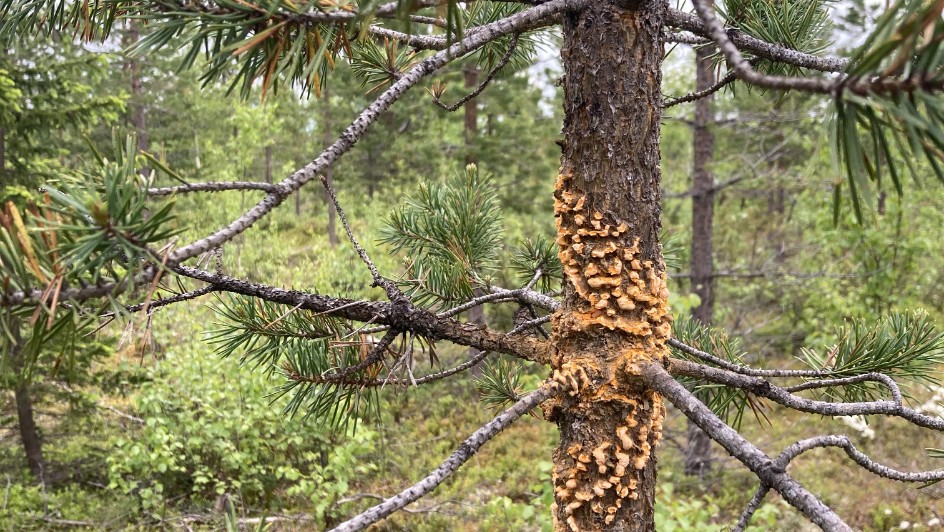
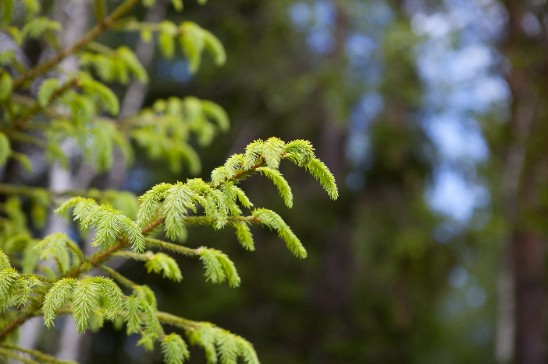
Scots pine blister rust is
increasing in the north – here are the factors that are associated with the risk
|
Scots
pine blister rust is spreading in the pine forests of northern Sweden and
Finland. Researchers now see a link between the disease and climate factors
such as temperature, precipitation, soil moisture and fertility—and that the disease may
increase further in a warmer climate.
Foto: Ke Zhang |
| |
He wants to lay the foundation for tomorrow's resistant spruce trees
|
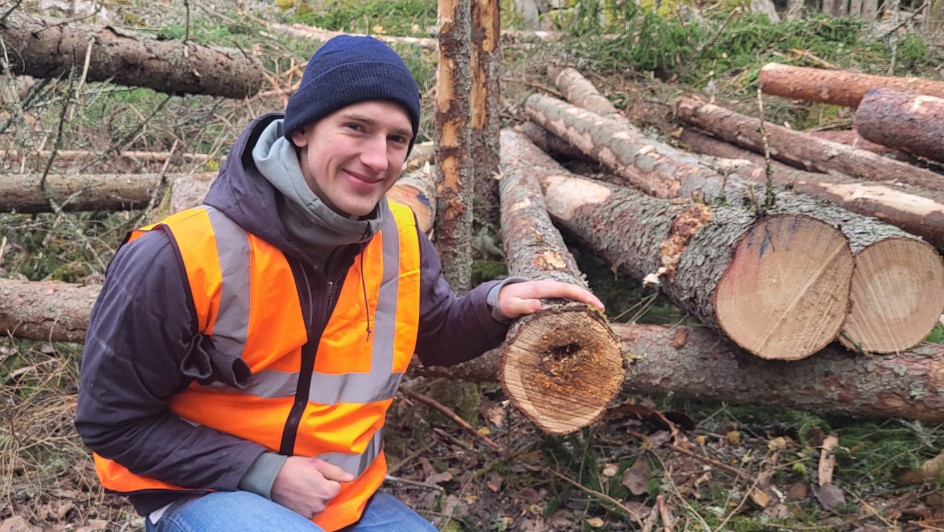
How does spruce defend itself against pathogenic fungi? And can this information contribute to future breeding programmes? Isak Ingerholt, a doctoral student at SLU Forest Damage Centre's research school, aims to find answers to these questions.
Foto: Isak Ingerholt |
| |
Storms in forests – how to reduce the risk of damage
|
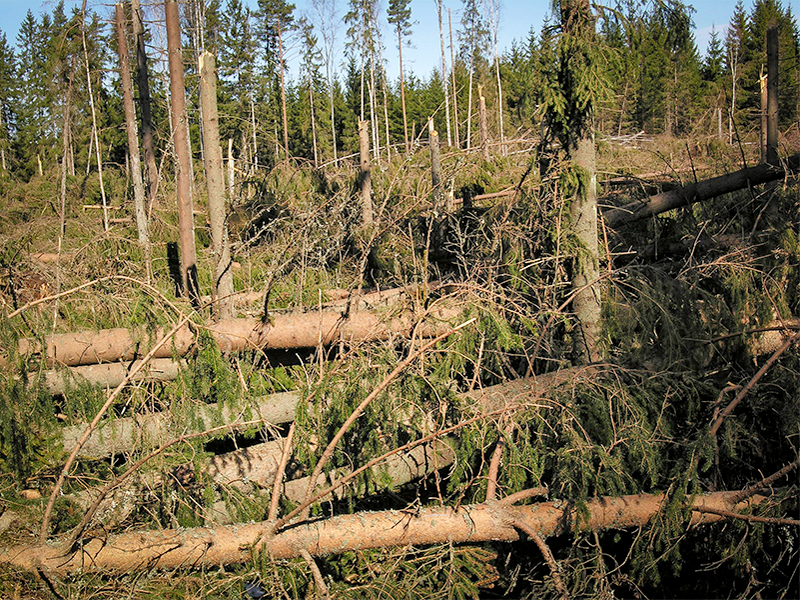
Several storms have hit Swedish forests in the 21st century – Gudrun, Per, Alfrida, Hans and, most recently, Johannes, which struck at the end of 2025. In a changing climate, storm damage is expected to become more common, but with planned forest management, the risk of extensive damage can be reduced.
Foto: Martin Schroeder |
| | Storm damage twice as high
During the 2000s, damage from storms and snow breakage in forests has increased to a significantly higher level in Swedish forests. This is shown by data from the National Forest Inventory.
Since Storm Gudrun in 2005, which according to the Swedish Forest Agency felled 75 million cubic metres of timber, a number of storms have swept across Sweden and caused extensive forest damage – Per, Dagmar, Simone, Hilde, Sven, Ivar, Gorm, Egon, Alfrida. And now Johannes, which may have felled 10 million cubic metres. Although none of the storms fell as much forest as Gudrun, together they have contributed to an increase in total damage. Storm and snow damage is approximately twice as high after Gudrun compared to before.
| We are now on LinkedIn
SLU Forest Damage Centre is now on LinkedIn. Follow us there.
| | | |
Double up at annual meetings in Linköping – two days of knowledge and dialogue
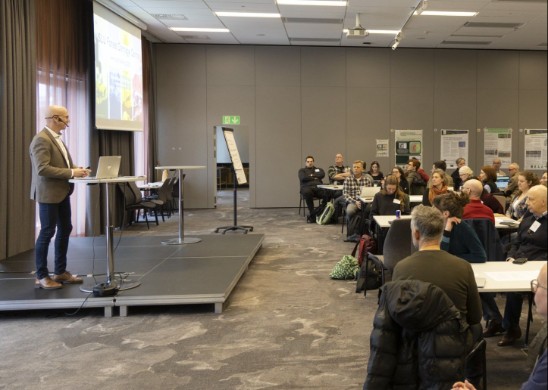
From climate research and presentation techniques to emergency preparedness exercises and uncertainty in decision-making, the annual meeting of the research school and the annual conference of SLU Forest Damage Centre offered two informative days in Linköping filled with knowledge, dialogue and new perspectives.
| |
Spruce volume increases across Sweden – despite shrinking areas suited under future climate
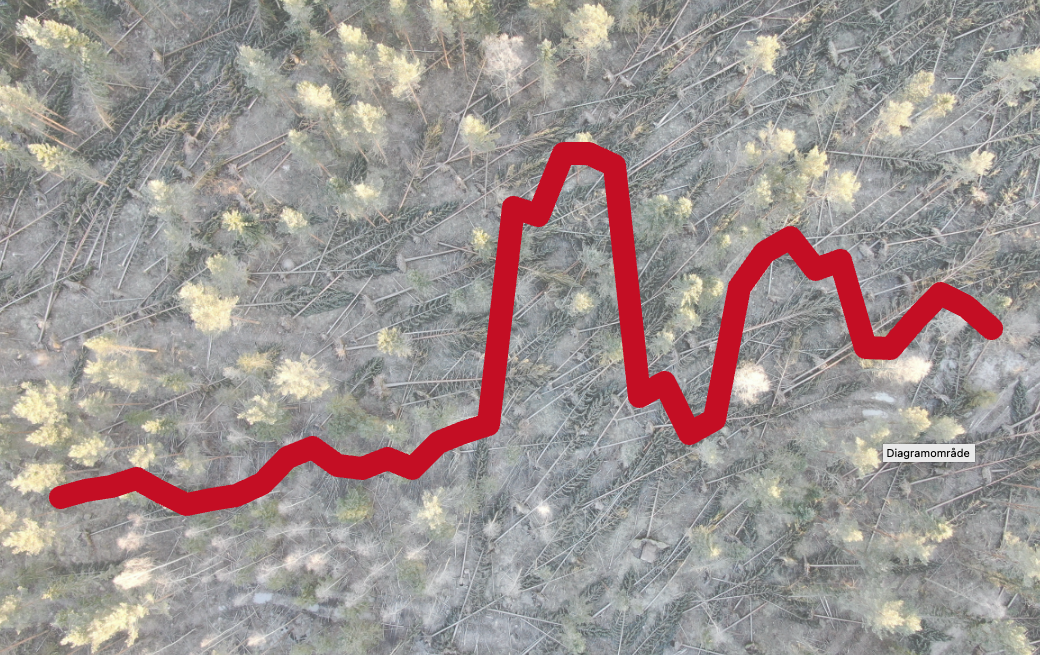
Climate projections indicate that large parts of southern Sweden may become unsuitable for spruce by the end of this century. But the current management trends are moving in the opposite direction: spruce volume is increasing.
Using projected habitat suitability for Norway spruce from 2005 to 2095 under two climate scenarios, researchers from Stockholm University and the Swedish University of Agricultural Sciences (SLU) have compared expected range shifts with long-term forest inventory data on spruce growing stock.
| | | | | | CalendarOur upcoming events, seminars and conferences. | SLU Forest Damage Centre invites researchers, the forestry sector and authorities to a start-up meeting prior to the call for doctoral projects. | | | |
The conference is primarily aimed at those working in the forestry sector, those who are professionally active in or researching forests, and forest owners. Save the date. | | | | | | Do you follow our newsletter?
When you subscribe to the SLU Forest Damage Centre newsletter, you will receive updates and new findings about forest damage. Scan the QR code or click on the button below. And don't forget to tell your colleagues or friends who own forests. | | | | Our next letter will be sent out in April | |
|
|
|
|