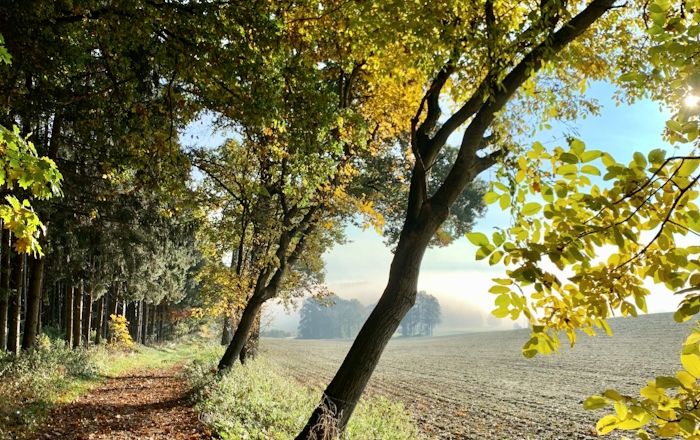
It's really starting to feel like autumn now. Warm cups of tea, yellow leaves and exciting studies on everything from new ways to protect crops from pests to how forestry and agriculture can adapt to a changing climate.
One thing we are particularly looking forward to is the National Plant Protection Conference. The programme is now finalised, and we hope to see you next month in Alnarp (but please be aware that the main conference language is Swedish)!
With pleasant autumn wishes
Katja Fedrowitz and Cajsa Lithell Coordinator and communicator for the SLU Plant Protection Network
Please observe: the main conference language is Swedish.
The programme is now complete – secure your place and register now!
Don't miss this opportunity to learn about the latest research, be inspired by future solutions and make valuable contacts in plant protection, agriculture, forestry and horticulture. This year's theme: ‘Forestry, horticulture and agriculture in a changing climate – innovative thinking for a sustainable future’.
Beneath the pines: how fungi drive forest nutrient cycles
In her new doctoral thesis, Katharine King shows how ectomycorrhizal fungi drive nutrient cycling in the forest by linking mineral weathering and nitrogen mobilisation, which supports tree growth and keeps the ecosystem healthy.
SustainPotato is developing resilient Nordic potato varieties by studying how genetics and microbiomes affect resistance to diseases like late blight. Now, the first round of root sampling are complete.
Forest management can reduce the risk of large wildfires
Increasing landscape heterogeneity by reducing forest stand size and diversifying tree species lowers the likelihood of fire spreading. Avoiding ditching is also beneficial.
This was demonstrated in a scientific study by researchers at the Swedish University of Agricultural Sciences (SLU) and the Natural Resources Institute Finland (LUKE).
Pollution and drought disrupt soil microbes that support crops
Laura J. Müller’s doctoral thesis shows how pollution and drought disrupt the soil microbes that control nitrogen cycling. Combined stressors can weaken these hidden ecosystems, threatening both crop growth and environmental health.
A research team from SLU, Linnaeus University and Örebro University has successfully produced a traditional cheese-making enzyme in plants. The results open new possibilities for sustainable dairy production.
Biological indicators can be the key to healthy soils in Europe
The EU wants all soils to be healthy by 2050 – but reaching that goal requires better ways to measure soil health. A new study shows that biological indicators, such as nematodes, could play an important role, but that more data and coordination are needed.
Researchers have developed new methods that will make it easier, faster, and more accurate to determine which form of Scots pine blister rust has affected a tree. This is important for choosing the right management method, reducing the spread of damage and for resistance breeding.
Unknown sources fuel boreal forests with nitrogen: "Really surprising"
Wildfires are vital for regrowth in boreal forests. But where does the nitrogen these recovering forests use actually come from? A new study on wildfire recovery sites across the boreal biome led by SLU, shows that the source of this vital nutrient largely lacks explanation.